 EN


Walk into any luxury hotel lobby, boutique villa, or high-end residential tower opened this year, and there is a good chance you have already seen it: a single wall where the natural veining of marble or onyx folds into itself like the pages of an open book. It looks effortless. It is not.
Bookmatched stone has become the signature move of 2026's most talked-about interiors—living room feature walls, double-height staircases, hotel reception backdrops, spa-like master bathrooms. But behind every flawless bookmatch is a decision chain that starts long before an installer ever picks up a trowel: which block the slab was cut from, how the two leaves kept paired through fabrication, and who actually controls that process from quarry to crate.
That last part is the piece most design articles skip—and the piece that quietly determines whether a project looks like the renderings or looks like a mismatched patchwork.
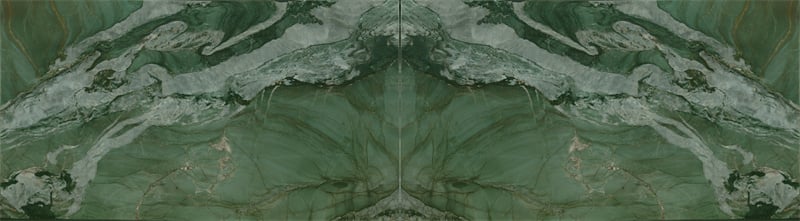
What "Bookmatching" Actually Requires (Beyond the Aesthetic)
Bookmatching sounds simple: slice a block, flip one half, mirror the veining. In practice, it is one of the more technically demanding processes in natural stone fabrication.
• The two slabs must come from consecutive cuts of the same block. Skip a cut, and the vein pattern loses continuity.
• Vein movement has to be read before cutting, not after—strong, directional veining (the kind that makes Calacatta and bookmatched onyx so desirable) only reads as symmetrical if the block orientation was planned from the start.
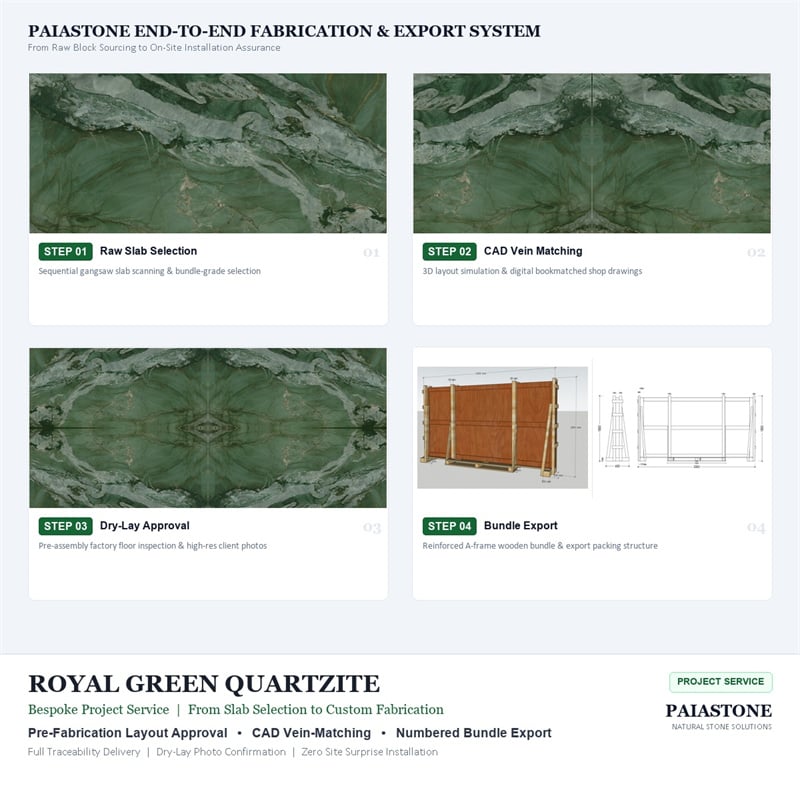
• Pairs have to stay together through polishing, crating, and shipping. A single mismatched crate on a container headed overseas can mean reordering an entire feature wall.
This is why the most dramatic bookmatched walls—the ones with Calacatta's bold grey-on-white drama or an onyx wall glowing amber when backlit—are rarely a lucky find at a local stone yard. They are the result of someone upstream managing slab-pairing discipline at the block level, long before a designer ever sees a photo.
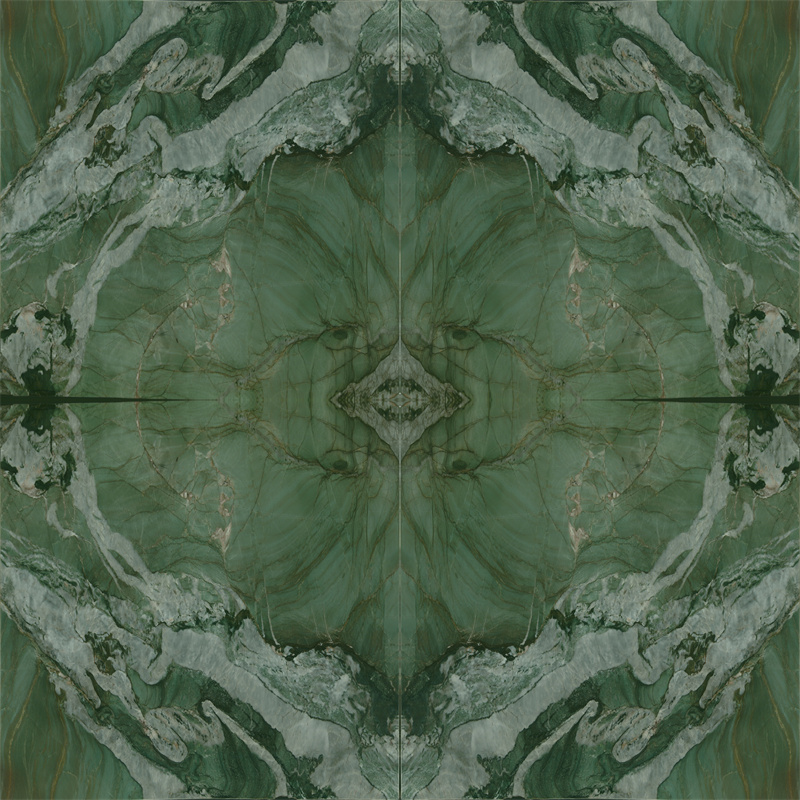
Calacatta: Still the Reigning Choice for Statement Walls
Among all marble types used for bookmatching, Calacatta remains the most requested for feature walls in 2026—and for a reason that goes beyond trend-chasing. Its background is brighter and more uniform than Carrara, while its veining is bolder and more linear than Statuario, which makes the mirrored pattern across a bookmatch read clearly even from across a room.
Designers lean on Calacatta (and its warmer and cooler variations) for:
• Living room and media wall backdrops where the stone needs to anchor the whole room
• Primary bathroom walls intended to feel like a private spa
• Reception and lobby walls in boutique hospitality projects, where the "wow" has to land in the first ten seconds
The catch: Calacatta's visual drama is exactly why slab-pairing errors are so visible. A one-block mismatch is far more obvious on a bold Calacatta vein than on a subtler marble — which is why experienced architects increasingly ask their stone supplier not just “do you have Calacatta,” but “can you guarantee the pair comes from the same block, with photos before you cut.”
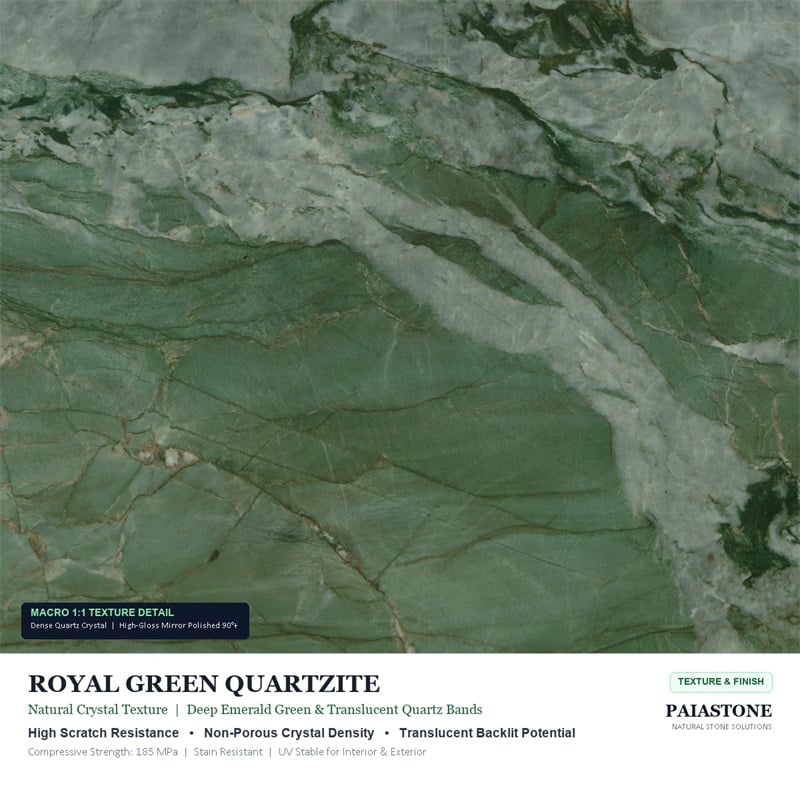
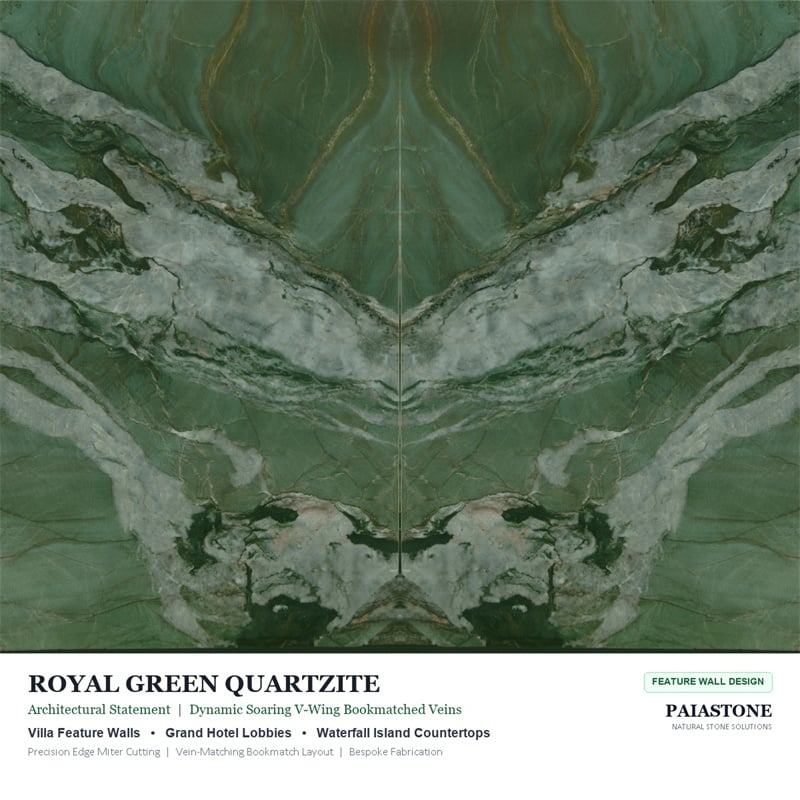
Onyx: The Material Designers Reach for When Marble Isn't Enough Drama
If Calacatta is the dependable showstopper, onyx is the material teams specify when a project needs something no paint, veneer, or engineered surface can replicate—translucency. Backlit bookmatched onyx has moved from a five-star hotel signature into high-end residential lounges, home bars, and statement powder rooms.
What makes onyx bookmatching particularly unforgiving is that its banding and color zones (honey, ivory, green, blue-grey) shift dramatically depending on how the block is sliced and which direction the light passes through it. Two slabs that look like a perfect pair in daylight can read completely differently once backlit—which means pairing has to be verified both unlit and under test lighting before a project commits to a wall's worth of material.
This is one reason sourcing partners who can supply full-slab photos and video — rather than small sample chips — have become the preferred route for architects specifying onyx at scale. A chip tells you the color family. It tells you nothing about how a 2.8-meter bookmatch will actually fold together.
Where the Supply Chain Quietly Decides the Outcome
Most coverage of bookmatched walls focuses on the design result — the "wow" wall in the finished render. Far fewer talk about the sourcing step that makes or breaks the project: who is actually managing block selection, pair-tracking, and crating discipline between the quarry and the job site.
This is where firms like PAIA STONE, a Xiamen-based natural stone exporter working with architects, developers, and contractors across more than 60 countries since 2016, tend to show up in the background of these projects rather than in the marketing copy. Sourcing directly from quarry partners in Italy, Turkey, Greece, and China, PAIA STONE's role in bookmatched projects is less about selling a slab and more about controlling the variables that determine whether a bookmatch actually matches—tracking block sequencing, documenting vein orientation before cutting, and keeping paired leaves together through polishing and export packing.
That kind of block-level discipline is also what large religious, hospitality, and institutional commissions tend to demand. On a recent landmark project—the Imam Al Bukhari Mosque, where PAIA STONE supplied and installed Portuguese Moca Cream marble across the exterior façade and Turkish white marble across four monumental interior spiral staircases—the standard for color consistency and pattern continuity left no room for a mismatched pair. The same pairing discipline scales down to a single living room feature wall just as it scales up to a national landmark; the process doesn't change, only the quantity does.
For architects and designers evaluating a bookmatch project, that is the practical question worth asking before falling in love with a reference photo: not just “which marble,” but “who is guaranteeing the pair stays together between the quarry and my site.”
Where Bookmatched Marble and Onyx Walls Work Best
Based on current specification patterns, five applications continue to dominate 2026 projects:
1. Living room feature walls behind seating areas — the single most requested residential application
2. Primary bathroom and spa walls, where symmetry reinforces a sense of calm luxury
3. Hotel lobby and reception walls, built to create a strong first impression at scale
4. Staircases and double-height walls, where vertical slab runs let the full vein pattern unfold
5. Backlit onyx features — home bars, powder rooms, and lounges where translucency becomes the centerpiece
Before You Specify a Bookmatched Wall
A few working notes for architects and designers scoping a bookmatched project in 2026:
• Ask to see full slab photos (and, for onyx, backlit test photos) before committing — not just a cut sample
• Confirm in writing that paired slabs are tracked and crated together through fabrication and shipping
• Plan vein direction and installation sequence with the fabricator before cutting, not after
• Budget for the fact that bookmatched installation complexity is higher than standard cladding — slab selection and alignment take longer and cost more to get right
• For large-format or international projects, work with a supplier who can manage quarry-to-site logistics as one accountable process, not a chain of separate vendors
The Takeaway
Bookmatched marble and onyx walls will keep showing up in 2026's most photographed interiors because nothing else — no veneer, no print, no engineered stone — replicates the one-of-a-kind movement of a real block of stone opened across two mirrored faces. But the design conversation around "which stone" is only half the story. The other half happens upstream, at the block, long before a slab reaches a showroom.
For teams sourcing Calacatta or bookmatched onyx for an upcoming project, that upstream half is worth as much scrutiny as the mood board—and it's where a sourcing partner who treats pairing discipline as a process, not a promise, tends to make the difference between a feature wall that looks like the rendering and one that doesn't.
PAIA STONE supplies Calacatta marble, bookmatched onyx, and other natural stone slabs to architects, designers, and contractors worldwide, with full-slab inventory review and quarry-direct sourcing. Project photos and current slab availability can be requested at paiastone.com.
Mission: To deliver superior stone materials through precise craftsmanship, sustainable sourcing, and innovative surface technologies—enhancing the quality, durability, and beauty of every space we touch.
Vision: To become a global leader in high-end stone solutions, redefining modern architecture and interior design with materials that combine natural elegance, advanced performance, and environmental responsibility.
Slogan: Stronger. Smarter. More Beautiful. Better.